
Better Outcomes by Better Outcomz · Complaints
Understand what went wrong - and why.
Complaint handling usually ends with a category and a resolution code. What rarely gets captured is the sequence of interactions, decisions and process failures that led the customer to complain - and whether the same pattern is repeating elsewhere in the book.
What Better Outcomes does here
Understand what went wrong - and why.
Better Outcomes can analyse complaint interactions alongside the wider customer journey to help identify the events, behaviours and process issues that contributed to dissatisfaction.
Move beyond complaint categorisation and begin identifying recurring patterns and opportunities for earlier intervention.
- 01
The journey before the complaint
Complaint interactions are placed alongside the earlier contacts and CRM events that preceded them, so reviewers see the build-up rather than just the outburst.
- 02
Potential root-cause identification
Root-cause assessment groups recurring drivers across complaints and sets out the evidence and confidence behind each potential cause.
- 03
Earlier-intervention signals
Findings show where an issue could have been resolved earlier - an unreturned call, an unclear letter, a missed commitment.
- 04
From insight to improvement
Recurring themes are reported by team, channel and journey stage, giving operations and complaints leaders a basis for change.
Walkthrough
One complaints journey, step by step.
A complaints team keeps receiving complaints about arrears letters and wants to understand what is happening before customers complain. Details are illustrative; the screens are real.
Step 1 of 4
The complaint is placed in its journey
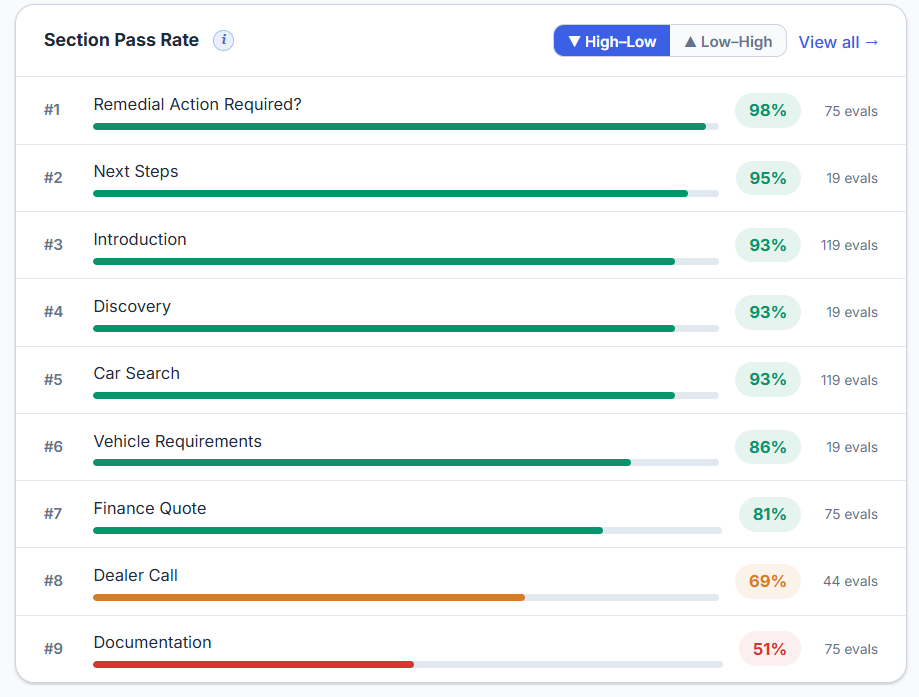
The complaint call is assembled with the letter that triggered it, the two earlier calls where the customer asked for clarification and the CRM note showing a call-back was promised but not made. Pass rates by journey stage show where outcomes deteriorate.
- Journey stages evaluated across every connected interaction
- The stage before the complaint is where outcomes fall
Step 2 of 4
The contributing failure is explained
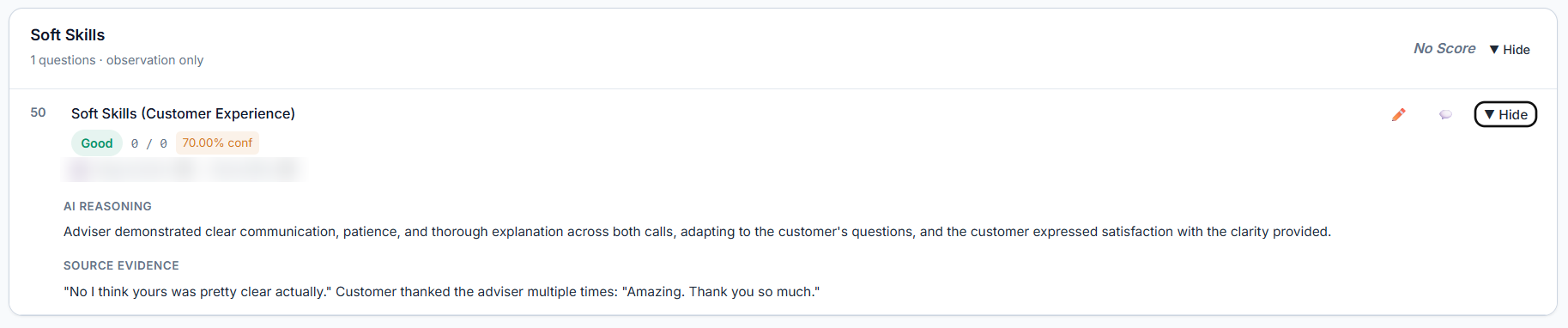
For the interaction before the complaint, Better Outcomes sets out its reasoning: the customer's question about the letter was acknowledged but not answered, and a commitment was made that the journey evidence shows was not kept.
- AI reasoning beside the verbatim source evidence
- Confidence level shown on the finding
Step 3 of 4
A potential root cause is identified across complaints
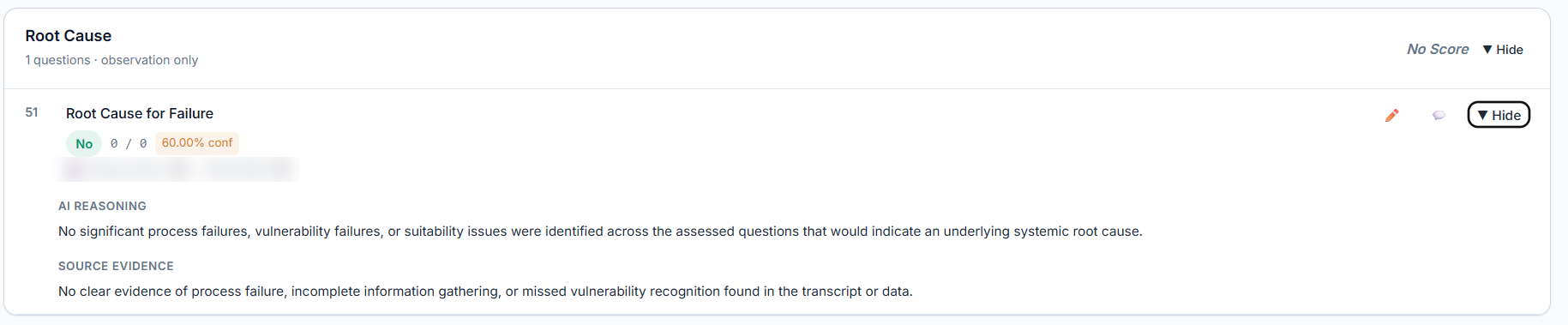
Root-cause assessment groups this complaint with others that share the same pattern - a confusing letter followed by unanswered questions - and sets out the evidence and confidence behind the potential root cause for the team to review.
- Systemic issue identified, not just individual errors
- Described as a potential root cause until confirmed by reviewers
Step 4 of 4
The theme reaches operations and governance
The confirmed theme is reported with its supporting evidence. Operations redraft the letter and add an owner for call-backs; complaints and risk teams track whether complaint volumes at that stage fall in the following months.
- Trend reporting for complaints, risk and Board
- Outcomes monitored after the operational change



In practice
What this looks like on a real journey.
- Example 01
The same complaint keeps arriving
Better Outcomes groups complaints with a shared potential root cause - such as a confusing arrears letter - and shows the evidence behind the pattern.
- Example 02
A complaint could have been avoided
Journey evidence shows the customer chased twice before complaining. The missed opportunities become coaching and process actions.
- Example 03
Root-cause reporting for governance
Themes and their supporting evidence are available for complaints, risk and Board reporting without manual file reviews.
Illustrative scenarios · Findings are surfaced for human review, not decided automatically
The question this answers
“What caused the experience to break down?”
What your team gains
- Identify recurring complaint drivers
- Surface potential root causes
- Understand what happened before the complaint arose
- Identify missed opportunities to resolve issues earlier
- Compare recurring themes across complaint journeys
- Turn complaint insight into operational improvement


Real Better Outcomes product screens · Shown with test data
AI assurance and explainability
AI you can evidence, not just trust.
The AI does not simply generate a score. It produces an assessment that a reviewer can check against the evidence used to reach it - and change if the evidence does not support it.
Your data
Customer data is not used to train public or general-purpose AI models. Products are hosted on UK infrastructure with access segregated by organisation, team and user.
Security and governance/ 01
Configurable outcome frameworks
Your outcome definitions, scorecards and rules - applied consistently across every connected interaction.
/ 02
Evidence behind every assessment
Each finding links to the interaction, CRM record and journey events it was drawn from.
/ 03
Explainable reasoning
The criteria applied and the reasoning followed are shown beside the evidence, not hidden in a score.
/ 04
Human-in-the-loop review
Reviewers confirm, reject, escalate or override - with authority to change the outcome and a recorded rationale.
/ 05
Confidence thresholds
Where applicable, low-confidence findings route to human review before any action is taken.
/ 06
Audit history
Findings, decisions, overrides and model versions are written to an append-only audit history.
/ 07
Configurable escalation
Route confirmed findings to remediation, coaching or compliance queues according to your governance model.
/ 08
Role-based access
Named permissions by organisation, team and role, with MFA and lifecycle management.
/ 09
Reporting and governance
Trend, calibration and override reporting for quality, operations, risk and Board oversight.
/ 10
Data controls
UK product hosting, tenant segregation and defined data scope agreed per deployment.
Frequently asked
Questions buyers ask us first.
- Does Better Outcomes handle or categorise complaints?
- It is not a complaints case-management system. Better Outcomes analyses complaint interactions alongside the customer journey that preceded them to identify recurring drivers and potential root causes, and reports those themes to complaints, operations and governance teams.
- How confident are the root causes it identifies?
- Each root-cause assessment sets out the evidence relied on and a confidence level, and is described as a potential root cause until your people have reviewed it. Better Outcomes does not claim definitive causation where the evidence does not support it.
- Can it show us complaints we could have prevented?
- Journey evidence shows what happened before the complaint - unreturned calls, unclear communications, unmet commitments - so missed opportunities for earlier resolution become visible and can be turned into coaching and process actions.
Insights for Complaints teams
Thinking worth taking back to your team.
- Quality & Compliance6 min readStop scoring calls. Start scoring outcomes.Christian Henson explains how Better Outcomes helps organisations move beyond sampled calls to assess customer outcomes across the whole journey.Read the essay
- AI Governance9 min readAI adoption does not end at go-liveChristian Henson explains why enterprise AI needs evidence-led assurance from approval and operation through to monitoring and change.Read the essay
Working session
See Better Outcomes on your customer journey.
Bring one representative customer journey and we'll show how Better Outcomes could assess it across interactions, CRM evidence and customer outcomes. No customer data is required for the first session.